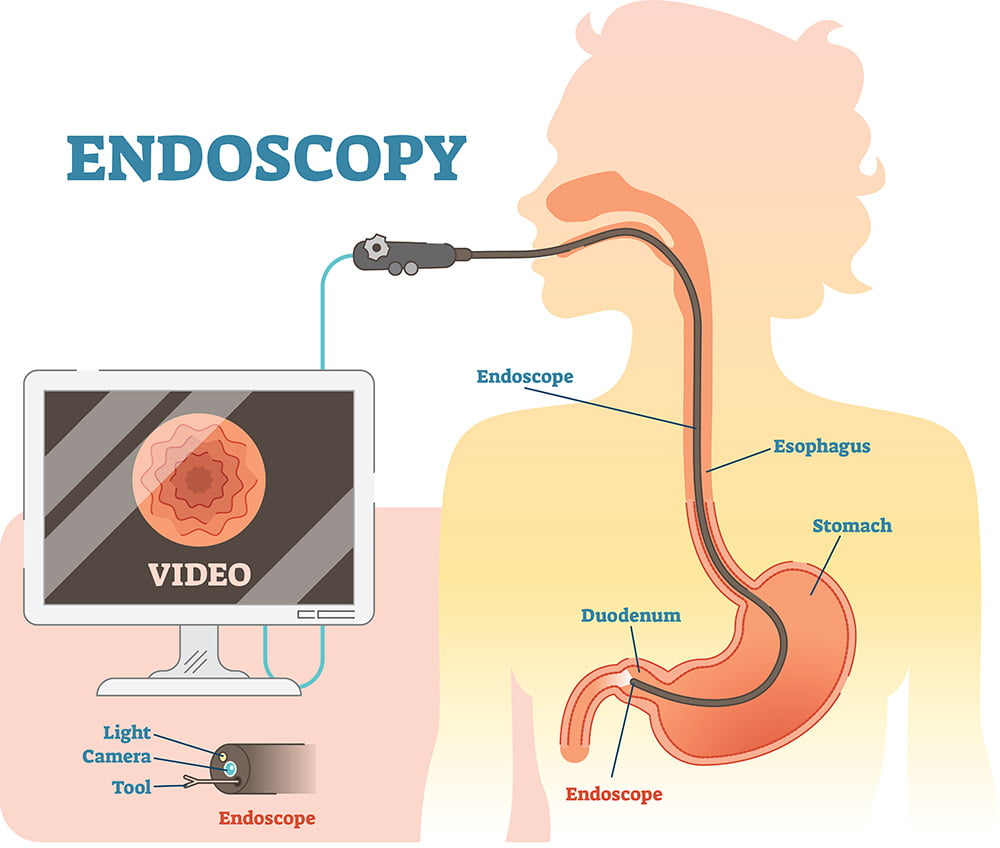
Why Endoscopy is Performed?
Gastroscopy serves as a vital tool in diagnosing various gastrointestinal conditions and diseases. Some of the key reasons why it is performed include:
Detection of Gastrointestinal Disorders
Gastroscopy aids in identifying and evaluating conditions such as gastroesophageal reflux disease (GERD), peptic ulcers, gastrointestinal bleeding, celiac disease, swallowing difficulties, and unexplained abdominal pain
Diagnostic Biopsies
During the procedure, tissue samples or biopsies can be obtained for further analysis, allowing for the detection of abnormalities such as inflammation, infection, or malignancies.
Assessment of Treatment Effectiveness
Gastroscopy may also be performed to monitor the effectiveness of ongoing treatments or interventions for gastrointestinal disorders.